Where is our engineering spend producing exceptional returns and where is it leaking?

Engineering value, made defensible
You know what engineering costs. Can you prove what it's producing?
TrueCost IQ shows where engineering investment is creating business value, where value is leaking, and which changes will deliver the greatest return.
Start with a 30-minute working session using assumptions from your own organization.
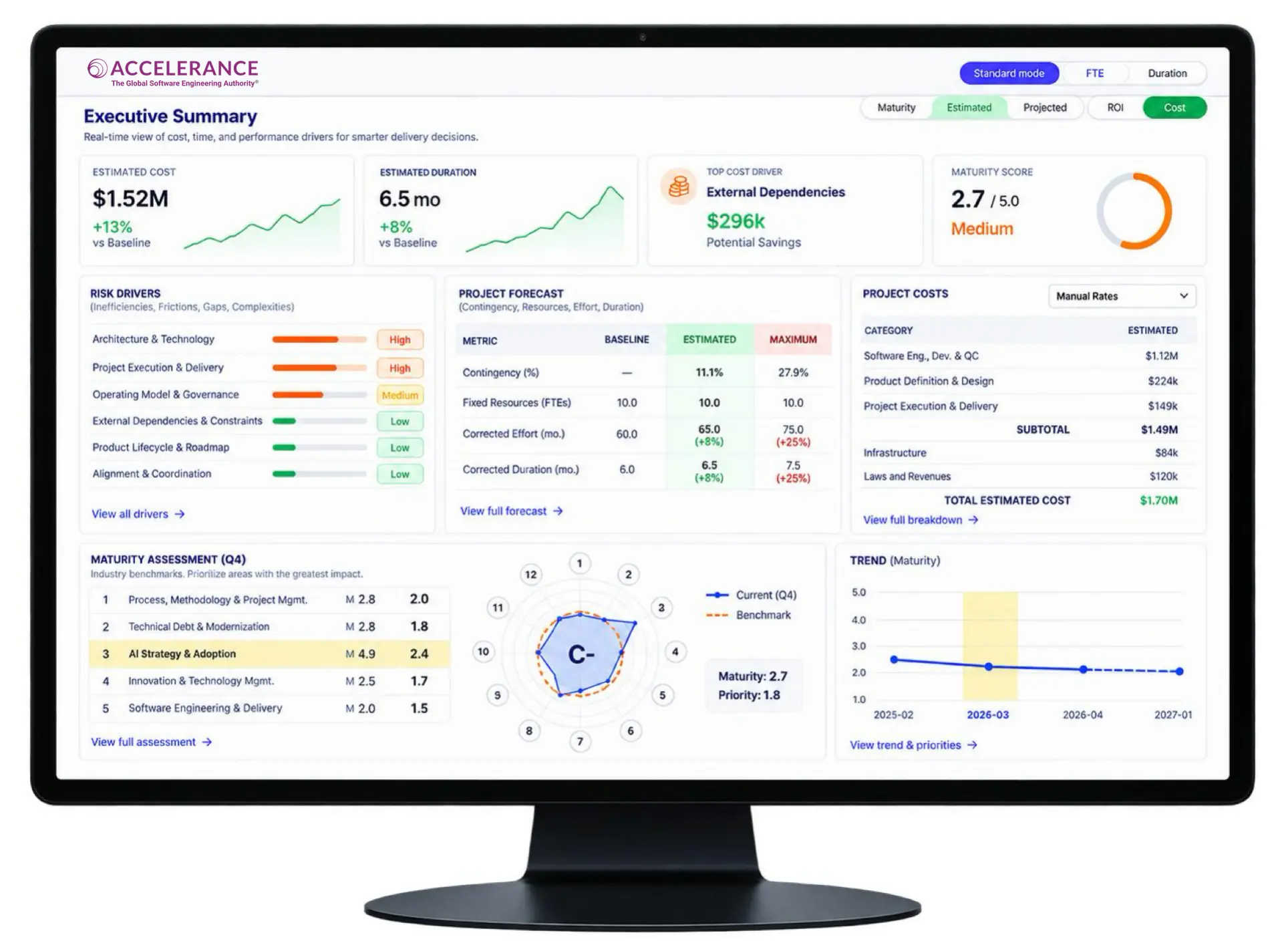
The executive conversation
You have more engineering data than ever. But can you defend the investment?
Headcount, velocity, releases, AI usage, and hourly rates measure activity. They don't show your CEO or CFO what the business is receiving for the money or where value is being lost. They are going to ask. Are you ready to answer?
What is actually driving cost, delay, and delivery risk?
Is AI creating greater business value or simply more engineering activity?
Which improvement will generate the greatest return?
The Engineering Value Assessment, powered by TrueCost IQ, gives leaders a quantified view of where value is being created, where it is leaking, and what to change first.
See what you receiveDiagnose · Quantify · Prioritize
From engineering signals to a decision you can defend.
Diagnose what is happening. Quantify what it means. Prioritize what to do next.
01
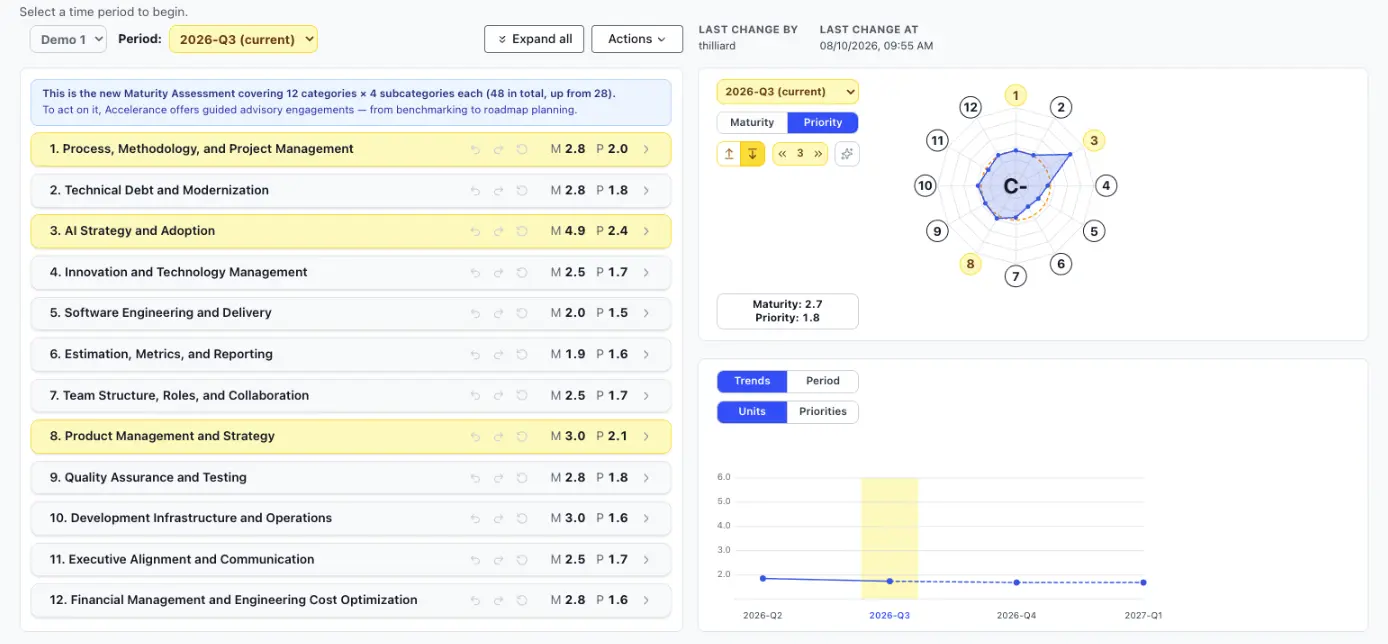
Diagnose
See where value is constrained.
Bring engineering maturity, delivery risk, team dynamics, AI adoption, and organizational alignment into one view. Surface the constraints ordinary activity metrics miss.
- Engineering Value and Leakage Map
- Benchmark across 12 engineering dimensions
- Clear view of maturity and improvement priority
02
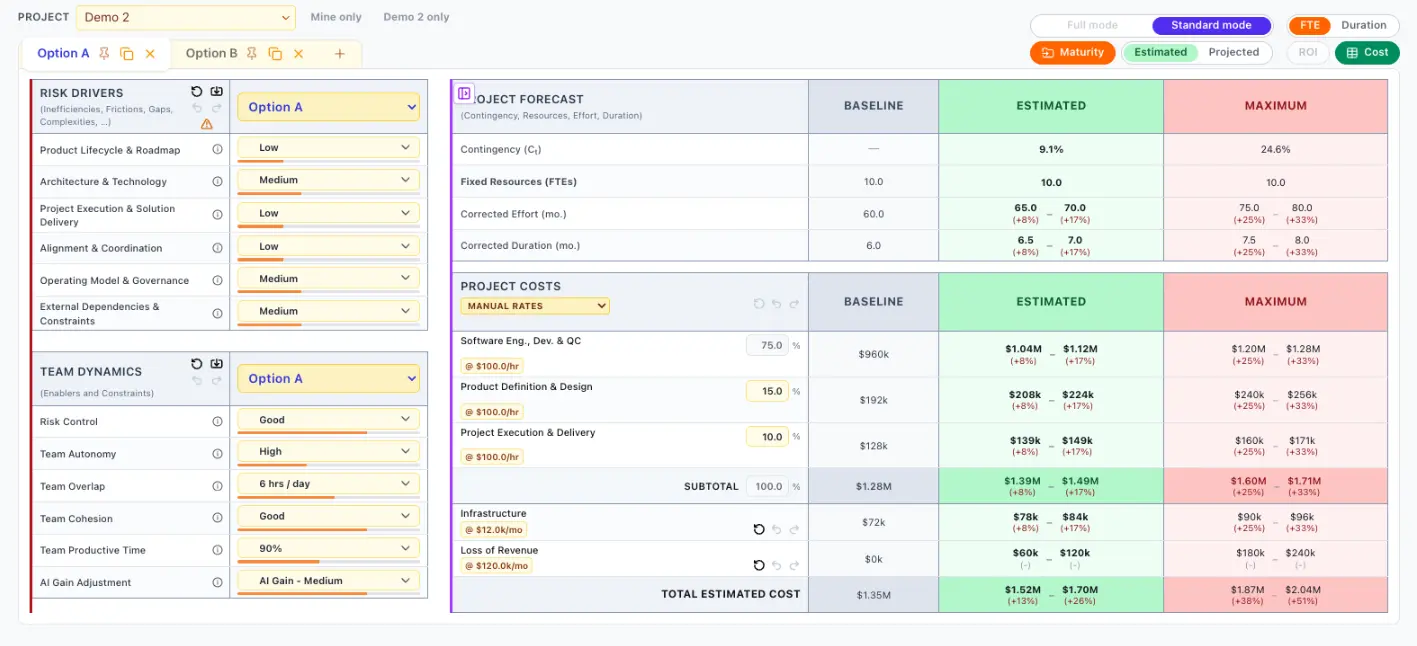
Quantify
Translate conditions into dollars, time, and risk.
Model how risk, team dynamics, delivery assumptions, and AI productivity affect cost, effort, resources, and duration. Compare baseline expectations with likely exposure.
- Economic Impact Model
- Quantified cost, delivery, and risk impacts
- Assumptions tested before a delivery decision
03
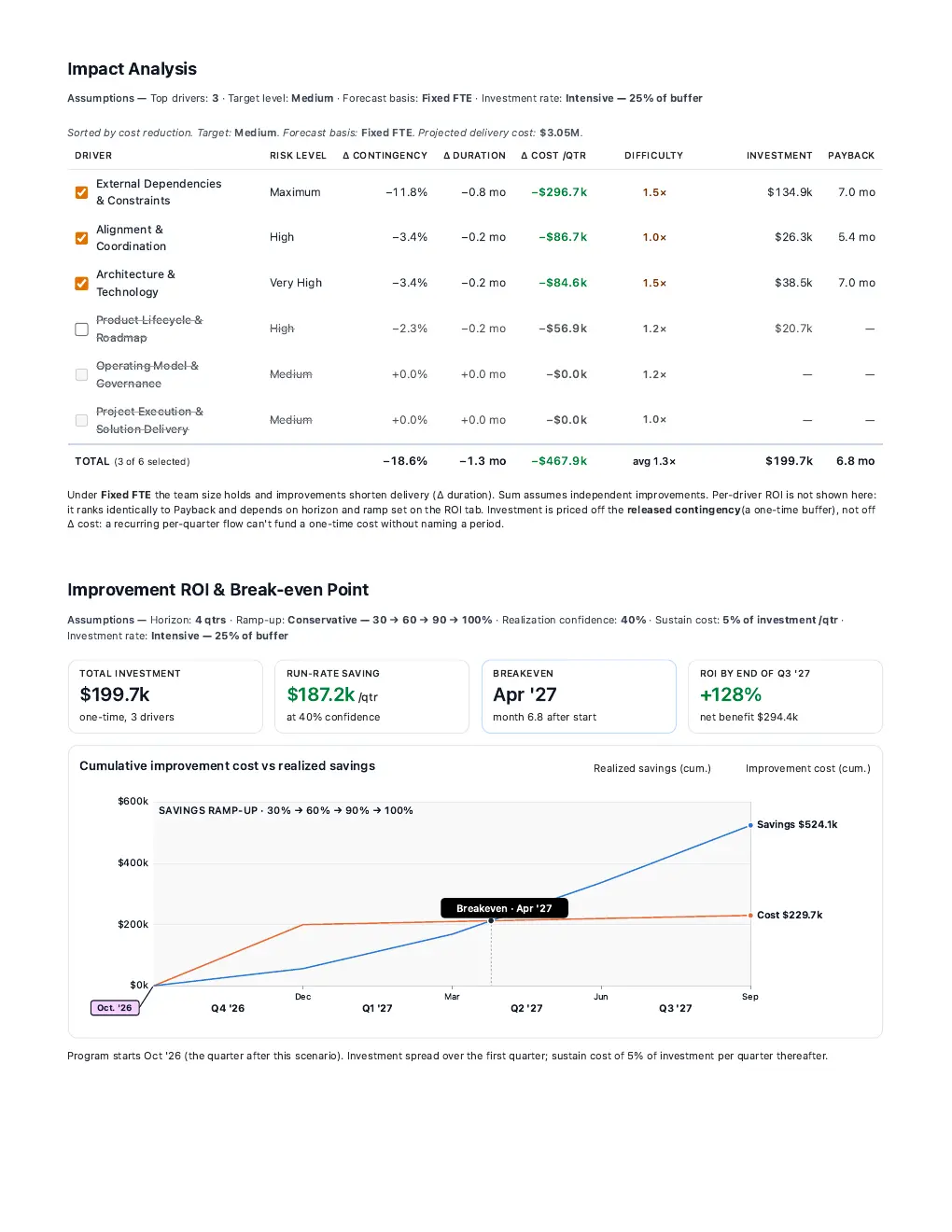
Prioritize
Build the case for what should change first.
Rank improvements by savings, delivery impact, difficulty, required investment, payback, and expected ROI. Move from a long list of issues to a short list of defensible actions.
- Decision-ready roadmap with ROI and payback
- The few drivers creating outsized impact
- A clear recommendation for executive action
The leadership outcome
Walk into the executive conversation with answers, not activity metrics.
Show your CEO or CFO what the business is receiving for its engineering investment, where value is being lost, and which decision is backed by the strongest economic case.
Defend
the return the business is receiving from engineering spend.
Expose
where cost, delay, risk, and value leakage are coming from.
Prove
whether AI and other investments are producing business value.
Prioritize
the changes most likely to deliver measurable return.
Decisions leaders can evaluate
Bring the decision that is difficult to see clearly.
Improve the current organization
Identify the process, technology, alignment, and team changes most likely to improve delivery economics.
Evaluate a delivery partner
Compare providers and delivery models using total cost and risk, not hourly rate alone.
Validate AI investment
Determine whether AI adoption is improving productive capacity, cost, speed, or quality.
Build the investment case
Quantify the cost, benefit, payback period, and ROI of an engineering improvement program.
Start with one decision
What does your executive team need you to prove?
Bring us one consequential engineering decision. We'll show you where value is being created, where it is leaking, and what to do next using assumptions from your organization.
Book a 30-minute TrueCost IQ sessionChoose a starting point
What would you most like visibility into?
- Where engineering value is leaking
- Whether the delivery model is cost-effective
- Which improvement should be prioritized
- Whether AI is producing measurable value
- How to explain engineering ROI to leadership